Thursday, November 14, 2013

Eleventh Set of Questions for EN 190/190 HM


 Good evening :)

Just a reminder that Dr. Michael Anthony Ingram will be speaking to our class on Tuesday the 19th on performance poetry for social justice.  He recommended that we read the following article:  http://files.eric.ed.gov/fulltext/EJ832207.pdf

I'd also like you to look over chapter 16 on rhythm and meter.

Ugh.  It took me two seconds to find the video of Prof. Wu's lecture on translating Robert Burns' poem into Chinese:


Jessica Marinaccio discusses the first translation of modern Chinese poetry here:

Here are a few more questions for you:

-- What does performance add to poetry?

-- Are you familiar with spoken word?  If so, which spoken word artists are you familiar with?  What do you make of this type of poetry?  (Have you been to MC's slam?)

-- Have you written poetry?  If so, which type do you prefer to write?  Why?

-- How can poetry strive for social justice?  Of the poems we've looked at so far, which poems fall into this category?  Why?

-- If you were to write a poem about Rockville or Montgomery College, what would you include in it?  Why?

-- If you were to write a poem about your life, what would you include in it?  Why?

-- If you were to write a poem about an issue that concerns you, what would you include in it?  Why?


-- What do you like about Patrick Camagian's approach to teaching high school literature?  Why?

-- What would you change about his approach to teaching high school literature?  Why?

-- How would you respond to his supervisors' lack of support?  Why?

-- Choose one of the students' poems to discuss.

-- If you were to study the work of a hip hop artist in EN 190, which one would you study?  Why?

-- If you were to study the work of a songwriter/musician in EN 190, which one would you study?  Why?

-- What is the place of popular culture in a class like EN 190?  Why?

-- Argue for or against translation.  Refer to some of the poems (and other works) we've read.

-- Which question would you ask Dr. Ingram?

See you on Tuesday!

Tuesday, November 12, 2013

Study Guide for Final EN 190/190HM Fall 2013


While I have an odd bit of time, I thought I'd start our list of works that are on the final for EN 190/190HM.  How quickly time is passing!

Graphic Fiction:  excerpt from Maus, "The Cigarette," "Here"

Text Fiction:  Sherman Alexie's "This is What It Means to Say Phoenix, Arizona" and "The Lone Ranger and Tonto Fistfight in Heaven"; Kate Chopin's "The Story of an Hour"; James Joyce's "Araby"; Ha Jin's "Saboteur"; Edgar Allan Poe's "The Cask of Amontillado"

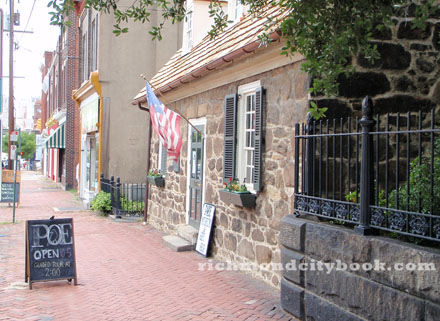
[The picture below is of the Poe Museum in Richmond, VA.]


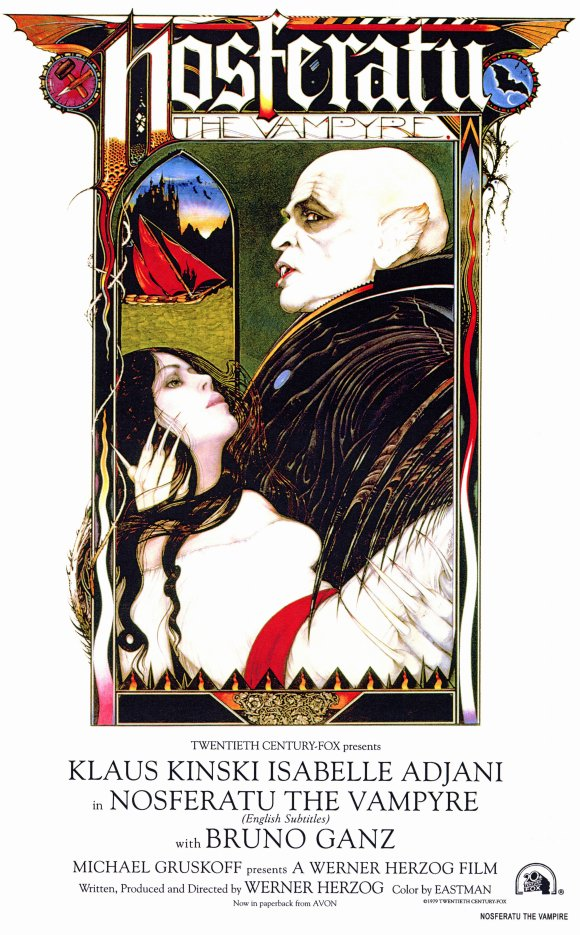
Film: F.W. Murnau's Nosferatu (1922) (the student presentation on vampires is at MyMC, and there may be a question on Werner Herzog's Nosferatu (1979))

Poetry:   We'll start with Walt Whitman's "I Hear America Singing":
http://www.poets.org/viewmedia.php/prmMID/15752 and "O Captain! My Captain!":   http://www.poets.org/viewmedia.php/prmMID/15754

Here is Ginsberg's "A Supermarket in California":  http://www.poets.org/viewmedia.php/prmMID/15306

Hughes' "I, Too, Sing America" is here:  http://www.poets.org/viewmedia.php/prmMID/1561, and here is a link to "Harlem":  http://www.poetryfoundation.org/poem/175884

Let's look at Mary Ellen Solt's "Forsythia":
http://courses.nus.edu.sg/course/elljwp/concrete_files/image002.jpg

We also looked at Williams' "The Red Wheelbarrow":  http://www.poets.org/viewmedia.php/prmMID/15537  Solt was influenced by Dr. Williams.

This is John Bradley's "On Trying to Teach the Immortal Life of Henrietta Lacks":
http://thebluehourmagazine.com/2013/10/17/on-trying-to-teach-the-immortal-life-of-henrietta-lacks-by-john-bradley/

Here is Coleman Barks' translation of Rumi's "What Was Said to the Rose"

We've discussed Gwendolyn Brooks' "The Rites for Cousin Vit":

Emily Dickinson's "I heard a Fly buzz":  http://www.poets.org/viewmedia.php/prmMID/15393

"Because I could not stop for Death":  http://www.poets.org/viewmedia.php/prmMID/15395

and "My Life had stood -- a Loaded Gun":
http://www.poetryfoundation.org/poem/237186

Robert Hayden's "Those Winter Sundays" is here:
http://www.poets.org/viewmedia.php/prmMID/19217

Charles Bukowski's "my old man" is here:  http://benjaminjacobballard.wordpress.com/bukowski-my-old-man/

Remember Lewis Carroll's "Jabberwocky":

See this link for Robert Burns' "Red, Red Rose":
http://www.poets.org/viewmedia.php/prmMID/16116


Martin Espada's poem set in Chelsea, MA is here:

We'll also look at some poems in translation.  The first poem from the Chinese Book of Songs is quite ancient:
http://web.cn.edu/kwheeler/chinese_poetry_dead_doe.html

Michael Farman's translation is more recent:
http://www.cipherjournal.com/html/shijing.html

Ugh.  It took me two seconds to find the video of Prof. Wu's lecture on translating Robert Burns' poem into Chinese:


Jessica Marinaccio discusses the first translation of modern Chinese poetry here:

Dr. Michael Anthony Ingram's presentation on (spoken word) poetry and performance (and politics) will be on the final.  How have our presentations this semester helped you understand literature more fully?  His PowerPoint is at MyMC, and several of the poems he performed to are at this site:

http://www.thecounselingpoet.com/poetry.html

Let's include the videos we listened to today:
http://www.youtube.com/watch?v=mEXu6UmRPZc

http://www.youtube.com/watch?v=LssFolrpiD4

And, of course, the link to Kate, Lukas, and El Hadj's Prezi on literacy:
http://prezi.com/davx36myehvl/world-literacy-rates-comparing-cause-and-effect/?utm_campaign=share&utm_medium=copy

Watch MyMC for Amavi and Sophia's PowerPoint on Sherman Alexie!


Let's consider these two poems that Amavi and Sophia looked at as well:
http://www.poets.org/viewmedia.php/prmMID/22091

http://www.poets.org/viewmedia.php/prmMID/20629

All student presentations will be considered for the exam as well.

See the next page for terminology!!

Tenth Set of Questions for EN 190/190HM


 I hope that everyone is enjoying our new classroom!  I certainly am.  :)

Today we went over quite a bit of terminology as well as the assignment sheet for the final paper.  Just a reminder that you will need to bring in two additional sources from our library (stacks or databases) or (if appropriate) Google or our textbook.  These additional sources will help you with your comparison/contrast.  

Thursdsay I will talk about the templates that Juan mentioned, so here they are:


I would also like you to read chapter 15 on figurative language as well as the following poems:
Here is the text of the Rumi poem that we listened to:

Do you know this poem by Robert Burns?
http://www.poets.org/viewmedia.php/prmMID/16116

Let's come back to this poem by Emily Dickinson:
http://www.poetryfoundation.org/poem/237186

We'll also look at some poems in translation.  The first poem from the Chinese Book of Songs is quite ancient:
http://web.cn.edu/kwheeler/chinese_poetry_dead_doe.html

Michael Farman's translation is more recent:
http://www.cipherjournal.com/html/shijing.html

Here is Arthur Waley's translation of "Drinking Alone By Moonlight," Li Bai's famous poem:
http://public.wsu.edu/~brians/world_civ/worldcivreader/world_civ_reader_1/drink.html

Scroll down to find Sam Hamill's more recent translation:
http://www.marcopolopoet.nl/PoemOP/Li_Po.htm

Finally, here are some of Anne Sexton's poems:
http://www.poets.org/viewmedia.php/prmMID/15297


Finally, these are the questions!

-- Which poems would you like to compare/contrast?  Why?  What appears to be their theme?  Which devices are used in these poems?

-- Choose one of the poems in translation.  Which poem (originally written in English) would you pair it with?  Why?

-- Choose a striking metaphor or simile in one of today's poems.  What does it add to the poet's poem?  How does it put the author's topic in a new light?  How is it strained?

-- Do any of these poems seem to be in code?  Choose one, and crack its code.

-- Choose one poem, its poet, and its theme.  Look one or more up at Literature Resource Center.  What do you find?  Look the same things up at Google.  What do you find?

-- What are some of the themes that we have encountered so far this semester?  Which poems fit into these themes?

-- What is the difference between melancholy and regret?

-- What does it mean for Li Bai to drink alone with the moon?

-- What does it mean for one's life to be like a loaded gun?

-- Which topics should be taboo for poets?  Why?

Enjoy!

Dr. Szlyk

Thursday, November 7, 2013

Ninth Set of Questions for EN 190/190HM


Good evening :)

For Tuesday, please read ch. 14 on voice, tone, and sound.  Here are a few extra poems for you.

Let's start with Lewis Carroll's "Jabberwocky":

"Do Not Go Gentle Into That Dark Night" is Dylan Thomas' villanelle:
http://www.poets.org/viewmedia.php/prmMID/15377

Elizabeth Bishop's "One Art" is another villanelle:
http://www.poets.org/viewmedia.php/prmMID/15212

Are you familiar with Gwendolyn Brooks' "We Real Cool":
http://www.poets.org/viewmedia.php/prmMID/15433

I really do want to get to Coleman Barks' translation of Rumi's "What Was Said to the Rose"

Today's extra poems follow.  Emily Dickinson's "Because I could not stop for Death" is here: http://www.poets.org/viewmedia.php/prmMID/15395
Robert Hayden's "Those Winter Sundays" is here:
http://www.poets.org/viewmedia.php/prmMID/19217

Here are a few questions for you:

-- What has it been like for you to listen to poetry as well as to read it?

-- Choose one of our poets whom we've discussed in class--or whom we haven't.  How would you characterize his/her voice?

-- What are the elements of voice?  

-- Compare formal poetry and free verse.  Which do you prefer?  Why?

-- Choose two poems whose theme is death.  How does each develop this theme?  How are the poems similar?  How are they different?

-- Choose two poems whose theme is the poet's relationship with his/her parents.  How does each develop this theme?  How are the poems similar?  How are they different?

-- Choose two poems with another theme.  What is this theme?  Why?

-- "Jabberwocky" is a "nonsense" poem.  How does it hold together as a poem?  Which poem would you pair it with?  Why?
  
-- Some have commented that Dylan Thomas' poetry is more sound than sense.  What do you think?  Why?

-- Compare "We Real Cool" to Gwendolyn Brooks' other poems that we've read.  How is this poem different?  How is it similar?

-- Coleman Barks' reading of "What Was Said To the Rose" is a little different from most.  What do you like about it?  What do you not like?  Why?  What does the music add to his performance?

-- Choose one of the poems we did not discuss in class.  What does it add to your understanding of poetry?  Which other poem would you pair it with?  Why?

-- Choose one of the poems we discussed in class.  What does it add to your understanding of poetry?  Which other poem would you pair it with?  Why?

Have a great weekend, and see you in class on Tuesday!  Feel free to bring water or Gatorade to class.

Tuesday, November 5, 2013

Eighth Set of Questions for EN 190/190HM


Good afternoon :)  

Today we began our unit on poetry, emphasizing Walt Whitman and William Carlos Williams. Those of you who know Spanish might be interested in Ruben Dario's poem to Whitman:


O for an English translation!

For Thursday, please read chapter 13 on words and images in poetry.  Here are links to the poems we discussed today:

First, we'll start with Williams' "The Red Wheelbarrow":  http://www.poets.org/viewmedia.php/prmMID/15537

Next is Whitman's "O Captain! My Captain!":   http://www.poets.org/viewmedia.php/prmMID/15754

Here is Ginsberg's "A Supermarket in California":  http://www.poets.org/viewmedia.php/prmMID/15306

Hughes' "I, Too, Sing America" is here:  http://www.poets.org/viewmedia.php/prmMID/15615

These poems carry over from today:

This is John Bradley's "On Trying to Teach the Immortal Life of Henrietta Lacks":
http://thebluehourmagazine.com/2013/10/17/on-trying-to-teach-the-immortal-life-of-henrietta-lacks-by-john-bradley/

Here is Coleman Barks' translation of Rumi's "What Was Said to the Rose"

The last is Gwendolyn Brooks' "The Rites for Cousin Vit":
http://apoppiti.qwriting.qc.cuny.edu/2013/03/11/the-rites-for-cousin-vit/

Let's look at a few other poems, too:
Emily Dickinson's "I heard a Fly buzz":  http://www.poets.org/viewmedia.php/prmMID/15393

and "My Life had stood -- a Loaded Gun":
http://www.poetryfoundation.org/poem/237186

Elizabeth Bishop's "One Art" (villanelle)
http://www.poets.org/viewmedia.php/prmMID/15212


We'll end with poems by Jane Hirschfield and Gary Snyder:

And here are a few questions for you:
-- What do these poems add to your understanding of poetry?

-- Gwendolyn Brooks' "The Rites for Cousin Vit" is a sonnet.  Why do you think that she chose to use this form?  How does her sonnet compare to others that you know?  It would be interesting to compare Brooks' Cousin Vit to Shakespeare's Dark Lady:

-- Some of these poems are free verse.  Other follow specific forms.  How does form help poet and reader?  How does it hinder them?  How does lack of form help poet and reader?  How does it hinder them?

-- Choose two of this week's poems.  Discuss the poet's diction (or choice of words) in each.  Which do you prefer?  Why?

-- Do you prefer "poetic" language or more everyday language?  Why?  Why not?

-- Do any images appear in more than one poem?  Discuss.  How does each poet depict his/her image?  How is it different from the way that the image is depicted in the other poem(s)?

-- Is poetry inclusive or exclusive?  Why?

-- If you read Spanish, what does Ruben Dario's "To Walt Whitman" add to the other poems about him?  How is Dario's Whitman different from the American poets' image of him?  How is it similar?  Consider that Dario and Whitman's life spans overlapped.

-- What does connotation add to poetry?

-- What does denotation add to poetry?

-- Hirschfeld and Snyder are very much influenced by Asian poetry.  Both, in fact, have translated poems from Japanese and Chinese, respectively.  What do their poems add to the American mix?

-- How do our poems so far represent America?  What seems to be missing?  Why?

See you in class!  I'm looking forward to reading your papers :)

Friday, November 1, 2013

Seventh Set of Questions for EN 190/190HM


 Good evening & Happy Halloween :)

I hope that your papers are coming along well.  I will be sending the last of the rough drafts this evening.  If you have questions, feel free to check in with me.  Also, the Writing Center will be open tomorrow if you would like to meet with a tutor.

Here is a link to Nosferatu online:  http://www.youtube.com/watch?v=KO5mMVeFZEQ

This is the version with the original score *and* English titles.  Nosferatu will be on the exam, so it is important to watch both parts.

On Tuesday we will begin poetry.  Please read ch. 12.  Here are five more poems for you.

The first is Sherman Alexie's "Defending Walt Whitman."


The next is Whitman's "I Hear America Singing":
http://www.poets.org/viewmedia.php/prmMID/15752


 This is John Bradley's "On Trying to Teach the Immortal Life of Henrietta Lacks":
http://thebluehourmagazine.com/2013/10/17/on-trying-to-teach-the-immortal-life-of-henrietta-lacks-by-john-bradley/

Here is Coleman Barks' translation of Rumi's "What Was Said to the Rose"

The last is Gwendolyn Brooks' "The Rites for Cousin Vit":
http://apoppiti.qwriting.qc.cuny.edu/2013/03/11/the-rites-for-cousin-vit/

And here are the questions:

-- Compare Nosferatu to graphic fiction that you have read.  How are they different?  How are they similar?  How do they complement each other?

-- Does EN 190 have a place for genre fiction (horror, SF, fantasy, mystery)?  Why?  Why not?

-- If you have studied art history or art appreciation, apply what you know to discuss Nosferatu as an art work.

-- If you have studied film history or filmmaking, apply what you know to discuss Nosferatu as a film.

-- Discuss elements of the supernatural in Nosferatu.

-- Discuss elements of the natural in Nosferatu.

-- Discuss the divide between city (Wisnau) and country (Transylvania).

-- Use concepts from EN 190 (plot, character, setting, image/symbols, narration) to discuss Nosferatu.  

-- Discuss Nosferatu and Ellen's attraction towards each other.  Here are some scenes from the 1979 Nosferatu:

What do these add to your understanding of these characters' dynamic?  How do they complicate it?

Take a look at the last eight minutes of the 1979 Nosferatu.  
Does this ending satisfy you?  Why?  Why not?  Compare this ending to that of the 1922 version.  

Do you think that Hutter should be a vampire at the end of the movie?  Why?  Why not?

What does Nosferatu add to your understanding of literature (given that it is a movie based on a book, not a work of literature itself)?

-- What comes to your mind when you think of poetry?

-- What do our six poems have in common?  How are they each different?

-- Which poem is most poetic?  Which is least?  Why?

-- What role does performance play in poetry?

-- What role does rhyme play?

-- Which topics are off limits?  why?

-- Can a poem be both poetry and prose?

-- If you are familiar with spoken word, compare some performances with one of our poems, especially Coleman Barks' translation.

-- Compare Alexie's poem to his short stories and prose.

See you in class!  I am looking forward to reading your papers.  :)

Tuesday, October 29, 2013

Sixth Questions for the Second Half of the Semester in EN 190/190HM


Good afternoon :)

Just a reminder that I will be happy to look over your rough drafts -- if they arrive by 11:59 pm tomorrow.  Let me know if I need to read for content, organization, grammar, or MLA.  If you have taken EN 102 already, feel free to do a little research for this paper.

I hope that you are enjoying Murnau's Nosferatu.  As I was walking home this afternoon, I realized how important plot is.  Of course, symbols, theme, and setting are important.  But plot is really important.  Character isn't as important as the characters are really archetypes, rather than fully fleshed out characters.

Here are a few more questions for you.

-- Discuss the role that genre fiction or film plays in EN 190.  

-- Discuss the role that plot plays in Nosferatu.  Map the story along the narrative arc that Mr. Goodwin gave you.  Consider any exposition, foreshadowing, or false closure.  Would flashbacks have helped this story at all?

-- Discuss the role that narrative plays in Nosferatu.  Consider that this film is presented as a story told by an unnamed individual (who has spoken to Hutter and the doctor).  Compare this narration to the narration in "Cask of Amontillado," "Today's Demon: Magic," or "The Last Convertible."  How does this narration help you?  How does it hinder you?

-- Discuss the role that character plays in Nosferatu.  

-- Discuss the role that visual elements play in Nosferatu.

-- Consider film as technology.  How does this apply to Nosferatu?

-- Consider film as art.  How does this apply to Nosferatu?

-- Consider film and literature.  How does this apply to Nosferatu?  (Consider the Stoker family's response to Murnau's film.)

-- Discuss the role that setting plays in Nosferatu.

-- Discuss the role that symbols play.

-- Consider that this film is Expressionist.  How do the characters embody their extreme emotions?  How do the sets support them?

-- What seems to be German about this film?  (Feel free to speculate.)

-- Compare and contrast the film we saw with the pictures from the 1979 version.

-- Compare and contrast the film to graphic fiction.  How does each genre add to literature?  How does each distract from it?

-- Compare and contrast the film to short stories we've read.  Which ones would you pair together?  Why?

See you on Thursday!

Dr. Szlyk