Monday, April 14, 2014

Questions after 4/14 Class


Good evening :)

In today's class, Sabina gave her presentation on African-American authors (thank you!), and we began discussing the canonical fiction of Nathaniel Hawthorne, starting with "Young Goodman Brown."  On Wednesday, we will finish discussing "YGM" and continue with "The Minister's Black Veil" and "The Birthmark."  See this link for the latter story:


We are a week away from the due date for the stand-alone paper.  What would you like to write about?

Also, what would you like to present on?

For example, maybe we need to focus on the Salem Witch Trials a little more!

Here is a History Channel documentary.  Note that it is almost an hour long:
https://www.youtube.com/watch?v=zIvwbu84GiY

A law school professor has put together a web site on famous trials, and the SWT are among them:  http://law2.umkc.edu/faculty/projects/ftrials/salem/salem.htm


What light does this information shed on Hawthorne's fictions, their setting, their plot, and their depiction of character?

For more on Nathaniel Hawthorne's life, see this biography:  http://www.egs.edu/library/nathaniel-hawthorne/biography/

What do you make of his life?

Here is a link to a student's article on Brook Farm, the utopian community where Hawthorne lived for a time.  He felt uncomfortable there and eventually left.

What does the presence of a utopian community like Brook Farm tell you about America in the mid-1800s?  Are you surprised that Hawthorne moved to Brook Farm?  Why?  Why not?

What light does the information about Brook Farm shed on Hawthorne's stories?

In "Young Goodman Brown," why does the title character remain with the devil?

What do you make of the ending of this story?  Why does YGB remain with his family and in his village?

How would you have responded to what YGB saw?  Why?

What does YGB tell you about good, evil, and morality?

How does YGB's perspective differ from the narrator's and/or the author's?  

Why does Mr. Hooper put on the black veil?

Evaluate him as a minister.

Why do his parishioners respond to him the way he does?

How does the narrator present Mr. Hooper?

Discuss Mr. Hooper's relationship with his wife Elizabeth.

In "The Birthmark," discuss Georgiana and Aylmer's relationship.

Which themes illuminate Poe's stories?  Which illuminate Hawthorne's?  Why?

Good night...and see you on Wednesday! 

Sunday, April 13, 2014

Questions After 4/11 Class


Above is a picture of The House of the Seven Gables, a museum in Salem, MA.  It's merely $12.50 per adult, no student discount.


Yikes!  I meant to send these questions yesterday or even Friday night.

With Nathaniel Hawthorne, we are moving onto an even more canonical short story and novel writer.  Moreover, his writing is very much concerned with Puritanism and its effects on the 1800s, and he is very much against perfectibility or the belief that we can be perfect.

For Monday, please read "Young Goodman Brown" and "The Minister's Black Veil."  If you have time, read "The Birthmark" as well:


Here are a few questions for your journal:

-- What do Poe's and Hawthorne's stories tell us about the way that American culture and literature is developing?

-- How did our emphasis on Puritan literature and culture help you to read Hawthorne's stories?

-- How do Hawthorne's stories shed light (especially a different light) on Puritan literature and culture?

-- Compare and contrast Poe's and Hawthorne's stories.  Which approach do you prefer?  Why?

-- How do Hawthorne's stories fit into American literature?

-- What do they tell us about American identity?  Why?

-- Compare and contrast Hawthorne's stories with more contemporary ones.  How are they similar?  How are they different?

-- How do Poe and/or Hawthorne depict women?  How do they handle questions of gender?

-- How do they illuminate questions of socio-economic class?

-- How do they fit with a more multicultural and racially aware approach to American literature?  Or do they fit?  Why?  Why not?

-- Do you believe that perfection is possible?  Why?  Why not?

-- Can we transcend our human nature?  Our human failings?  Why?  Why not?

-- What is human nature?  Why?  Why not?

-- In what ways are literature and the desire for social change compatible?  Why?

-- In what ways are they incompatible?  Why?

Wednesday, April 9, 2014

Questions After 4/9 in EN 211


Good afternoon :)

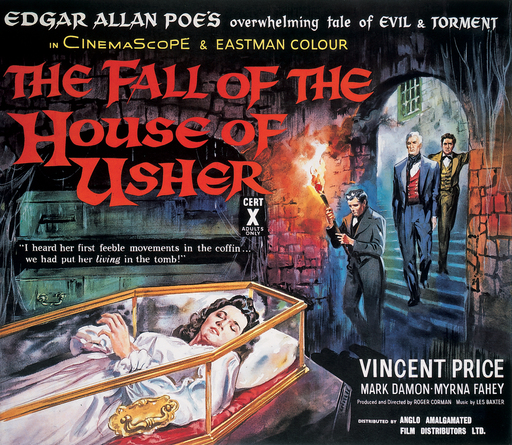
For Friday, we will turn to more canonical fiction by Edgar Allan Poe ("The Fall of the House of Usher" and "The Tell-Tale Heart"), one of the pioneers in short-story writing (as opposed to sketch-writing) as well as, of course, his poem "The Raven."

Here are a few questions for you and your journal:

-- What does Edgar Allen Poe add to the fiction that we have been studying this semester?

-- What does he add to the poetry that we have been studying this semester?

-- Compare Poe's stories to other stories you've read outside of this class.  These stories may be "genre" fiction.  Poe is known for his tales of horror as well as his mystery fiction.  

-- To what extent is Poe entertaining his readers (including you)?

-- To what extent does analysis or historical background help you understand his work more fully?

-- Poe is a very popular writer although he is not as canonical as some.  Why do you think that he holds that position?  

-- Of the fiction writers we've read so far, which TWO are most deserving of being read  in your high school English class or future editions of EN 211?  Why?  Why not?

-- Should literary authors write to effect social or political change?  Why?  Why not?

-- Should literary authors write to entertain?  Why?  Why not?

-- Can an author do both?  Why?  Why not?

-- When you choose works to read in a literature course, what role does the author's intention to effect social or political change play?  Is it positive?  Is it negative?  Why?  Why not?

-- What role does gender play when one is choosing works to read in a literature course?  Why?  Why not?

-- How have our readings so far illuminated questions of gender?

-- How have our readings so far illuminated questions of socio-economic class?

-- How have our readings so far challenged your ideas about American identity?

By the way, Poe was one of A.B. Longstreet's fans!

Monday, April 7, 2014

Questions After 4/7 Class


Above is a picture of a volunteer at Old Sturbridge Village, a Massachusetts museum that depicts life from 1790 to 1840.  Below are a few other pictures that give you an idea of how the museum portrays this era that we are now reading about.


Good evening :)

For Wednesday, we will focus on Harriet Beecher Stowe's stories, specifically "Trials of a Housekeeper" and "The Freeman's Dream."  Note that HBS wrote Uncle Tom's Cabin and was, in Lincoln's words, "the little woman who wrote the book that started this great war."  If you are curious, feel free to take a look at the excerpt from her novel, which is included in our textbook.  

We may have another presentation as well.  

Also, the stand-alone essay will be due on April 21.  Have you thought about which work you will examine?  Will it be a sketch or story?

Here are a few questions for you:

-- Below are the trailers that we looked at:
https://www.youtube.com/watch?v=7Afx8MGg00g

Unfortunately, no one has made movies of 18th c. novels about heroines who lead more dissipated lives.  

Compare the lives of Jane Austen's characters to the lives of the young women portrayed in both "The Dance" and "Cacoethes Scribendi."

-- Consider the ways that each story ends.  Compare them to the epiphany type of ending that we see in more contemporary fiction.

-- Compare this older fiction to contemporary fiction (both literary and genre).

-- How are Mrs. Stowe's stories different from the fiction we've looked at so far?  How are they similar?

-- Consider Miss Sedgwick's attitude towards writing.  Compare it to other authors' apparent attitudes.  Who is most similar to her?  Who is most unlike?  Why?

-- Which themes have been developed in our writing so far?

-- If you were to revise your midterm essay to fit our post-midterm reading, what would you do?  Why?

-- What does Mrs. Stowe's writing tell you about the way that men and women lived in the 1800s?  Compare the information to what Mr. Longstreet or Miss Sedgwick's writing tells us?

-- Do you think that Mrs. Stowe is using her short stories to effect social or political change?  Why?  Why not?

-- Discuss Mrs. Stowe's attitude towards African-Americans.  Why did she write about slaves?

-- How is the United States evolving at this point?

-- How is its literature evolving at this point?

-- How does looking at British literary works affect the way that you look at American literary works?

-- Do you feel that American literature has a distinct identity at this point?  Why?  Why not?

-- Does American literature have a national identity yet?  Why?   Why not?

I am looking forward to seeing what you have to say!

Questions After 4/4 Class


Above is a link to Katherine Pyle's illustration from the story of Mishosha.  This illustration dates from 1911 and is part of a children's book of stories from various cultures, including India.

Here is a link to the Popeye cartoon that we watched:  https://www.youtube.com/watch?v=FyVEaMz3EPg

For Monday, I would like you to read the following short stories:  Longstreet’s “The Dance” and Sedgwick’s “Cacoethes Scribendi.”  As I mentioned, Longstreet is a Southern writer.  Sedgwick is a feminist writer.

Here are a few questions for you and your journal.  BTW, the journal is a great way to catch up on your readings.

-- Rip Van Winkle is a mythic figure from American literature.  Why do you think that he has captured our imagination in a way that other fictional characters have not?

--  What are other mythic figures from American literature or history?

-- What does "Rip Van Winkle" tell you about the transition to the United States?  Why?

-- Here is an outline of the hero's journey.  http://orias.berkeley.edu/hero/journeystages.pdf
How do Rip Van Winkle and the older brother in "Mishosha"  follow this journey?  What do you make of the way that Rip Van Winkle parodies this journey?


-- Why is the story "Mishosha" named after the antagonist?

-- Here are some Ojibway/Chippewa myths.  Compare/contrast them to "Mishosha."

How may Mrs. Schoolcraft have adapted her story for non-Native audiences?

-- Compare "The Dance" and "Cacoethes Scribendi" to the other short stories you've read in 211 or elsewhere.

-- How does Longstreet depict the South in his story?

-- How does his story develop the theme of American identity?  or American literature?

-- How does Longstreet and Sedgwick depict relationships between men and women in their story?

-- How does Sedgwick depict writing in her story?

-- How does her story develop the theme of American identity?  or American literature?

-- What is it like for you to turn to fiction?

-- How does American literature seem to be developing in the early 1800s?

I am looking forward to seeing what you have to say!

Wednesday, April 2, 2014

Questions After 4/2 Class


Above is the statue of Phillis Wheatley in Boston.  It dates from 2003 and was sculpted by Meredith Bergmann.


Good evening :)

On Friday we are moving on to the short story with Washington Irving's "Rip Van Winkle" and Jane Schoolcraft's "Mishosha."  What is it like for you to move to this familiar genre--and to return to Native American writing?

Here are a few questions for you, which are based on today's reading & discussion as well as on Friday's reading.

-- Again, what is it like for you to return to poetry with Phillis Wheatley's work?

-- If you are familiar with African-American poets from the 1900s and 2000s, consider how Miss Wheatley may have influenced them.  Is it a good thing or a bad thing that she has influenced them?

-- Discuss Miss Wheatley's approach to poetry.  How did it appear to evolve over time?  Which themes did she favor?  Which devices did she try?

-- Compare Miss Wheatley's poetry to Mrs. Bradstreet's or Rev. Taylor's.

-- Compare Miss Wheatley's poetry to the work of these 18th c. British poets.  Some, like Alexander Pope's, are neoclassical.  Others are Pre-Romantic or Romantic.  The second poem is by Ann Yearsley, a servant-poet whose literary patron was Hannah More.

How do these other poems help you to understand Miss Wheatley's poetry?  Where does she fit in with these poets?

-- How does Miss Wheatley argue for her humanity in her poems?  Is it effective?  Is poetry in general an effective way of arguing for one's humanity?

-- What do her poems reveal about slavery in the colonies and/or Boston?

-- What do her poems reveal about religion in her era?

-- What do her poems reveal about the transition to the United States?

-- Again, what is it like for you to turn to fiction?

-- How are Irving and Mrs. Schoolcraft's stories similar to fiction you've read?  How are they different?

-- How do Irving and Mrs. Schoolcraft represent American identity and experience?  

-- Compare Mrs. Schoolcraft's story to the Native American myths you read at the beginning of the semester.

-- Are you familiar with the story of "Rip Van Winkle"?  Compare Irving's actual story to the versions you may be familiar with.

-- What do these stories reveal about the transition to the United States?

-- What do they add to American literature?

I am looking forward to seeing and hearing what you have to say!

Dr. Szlyk

Questions After 3/31 Class


Above is Miss Wheatley's portrait by Scipio Moorhead, the artist she addressed in her poetry.


Good evening :)

It was good to see everyone at the library.  It looks like we may have another theme to try: sympathy in literature.  When you think about it, you have quite a few themes--and works to choose from.

Wednesday we will not have a presentation.  Instead, we will return to poetry with Phillis Wheatley and John Dickinson.  Note that this is a change in reading and a return to regular chronology.

-- What did you learn from Ms. Pandya's presentation?

-- Try out a search term at JSTOR, Project MUSE, or Academic Search Complete.  What did you find at the database?

-- Look up one of our authors at Biography in Context.  What did you find?

-- What would you like to write about for the stand-alone essay?  Why?

-- What would you like to present on?

-- What is it like for you to return to poetry?  (We won't count Douglass' "Parody.")

-- What is it like for you to return to the transition between the British empire/American colonies and US Independence?

-- How do Phillis Wheatley and John Dickinson embody American identity?

-- Compare these poets to earlier poets you've read in our class.

-- Discuss PW as an African-American poet, a slave poet, and a female poet.

-- How does PW draw our attention to slavery?  (Note that her life as a freedwoman was extremely difficult.)

-- Discuss PW's life as a slave.  How do her master and mistress treat her?

-- Discuss JD as a poet.

-- Which themes are developed in their poetry?

-- Compare PW & JD to other, more contemporary poets that you've read.

Good night!

Dr. Szlyk