Tuesday, October 15, 2013

Second Questions for the Second Half of the Semester in EN 190/190HM


Good afternoon :)

Today we began the second half of the semester by going over the midterms, discussing the upcoming response to fiction, and examining graphic fiction (excerpt from Maus, "The Cigarette," and "Here").  Thursday we will go over the assignment sheet for the presentation, and the reading will be ch. 8 (Irony, Style, and Tone) and the short stories by Sherman Alexie: “This is What It Means to Say Phoenix, Arizona” (254-263) & “Somebody Kept Saying Powwow” (268-274).  Also, here is a cool poem by Alexie:http://www.bpj.org/poems/alexie_whitman.html


And here are your questions:

-- Which response would you like to expand for the "fiction paper"?  Why?

-- Which stories would you compare and contrast in your paper?  Why?

-- What did today's discussion of graphic fiction add to your understanding of this genre and its balance between text and graphics?

-- Technically speaking, the graphic fictions we looked at today are actually life writing, a genre that includes biography (Maus) and autobiography/memoir ("The Cigarette").  What does this genre add to EN 190?  What does it take away from our course?  Consider that works like Fences, A Doll House, and "Everyday Use" are grounded in reality even though the characters are fictional.  Consider that some (but not all) first-person narrators may be identified with the story's author.  

-- Should EN 190 include more life writing?  Why?  Why not?

-- Should EN 190 include more experimental writing like "Here"?  Why?  Why not?  Consider the following other examples of experimental writing:
Yikes...these are all poems.  These two are fiction.
How does "Here"'s format enable its author to be more experimental?  How do visuals add to experimental literature?  What do the text-only pieces add?

These authors discuss the demise of hypertext fiction, but I think that their arguments may also be applicable to experimental fiction--or futurism in general and maybe even to the graphic novel:

On to Sherman Alexie....

Discuss the impact of irony, tone, and style in Alexie's writing.  Compare it to their impact on other writers' work.

Discuss Alexie's approach to plot.

Discuss his creation of characters.  Note that characters frequently reappear in his stories.

Which character may be a surrogate for the author?  Why?  Have other such surrogates appeared in the stories we've read so far?  If so, where and why?

Discuss the impact of setting in Alexie's stories.  How do his settings affect you as a reader from Montgomery County?

Compare Alexie's stories to "Love in LA," "The Red Convertible," "Where Are You Going, Where Have You Been?", "Hills Like White Elephants," and "The House on Mango Street."  What do they tell you of the American experience?  of the experience of people of color?  of human experience?

What is it like for you to return to (text) fiction?

See you in class!

Dr. Szlyk

Saturday, October 12, 2013

First Questions for the Second Half of EN 190/190HM


Good evening :)

This evening I realized that I haven't sent out the email that I usually send out on Thursday evening--and here it is Saturday night!

With that in mind, the reading for Tuesday will be  “Superman and Me,” the excerpt from Maus, and “I Am Not Batman” as well as “The Man to Send Clouds,” “Cigarettes,” "Here," and “A Very Old Man with Enormous Wings.”  Note that these are the same readings we had for last Tuesday.  We will move on to the stories by Sherman Alexie on Thursday.

This afternoon my husband and I saw Wajdja, a movie set in Saudi Arabia.  This movie is about a girl who is at odds with her milieu, and it kind of reminds me of "Cigarettes."  Here is the trailer to Wajdja:

Here is the trailer to Persepolis, the movie version of the book from which "Cigarettes" was taken.

Actually, you can see the whole movie here:
http://www.youtube.com/watch?v=fNx4Pa2Gqfk

These are a few questions to start with.

-- Now that you are midway through our semester (and the unit on fiction), what comes to mind when you think about literature?  Why?

-- What comes to mind when you think about drama and the theater?  Why?

-- What comes to mind when you think about fiction?  why?

-- How did Ms. Vartanoff's presentation help you with Tuesday's reading?

-- Why should EN 190 include graphic fiction?

-- Why should EN 190 *not* include graphic fiction?

-- How is graphic fiction literature?  How is it not literature?

-- Recently my husband and I saw a play based on a foreign film from the 1970s?  Is it a good idea for playwrights to adapt movies to the stage?  Why?  Why not?

-- What do today's readings add to your understanding of fiction?

-- What would you like to write about for your paper on fiction?  Why?

-- Compare the trailers to Wajdja and to Persepolis?  Which seems to be a better vehicle for a coming of age story of a girl in Muslim society?  Why?  Why might someone prefer a live action film?  Why might someone prefer animation?

-- Compare the trailer to Persepolis and "Cigarettes."  Does "Cigarettes" seem to be a representative selection from Persepolis?  Why?  Why not?  Why do you think that our editors chose this particular story?  

-- Feel free to compare "Cigarettes" to other "coming of age stories" that we've read, especially to "Today's Demon: Magic" but also to "The House on Mango Street" or "Where are You Going, Where Have You Been?" or "Superman and Me."

-- Do you feel that the excerpt from Maus is representative?  Why?  Why not?

-- Discuss "Here" and "Girl" as stories that take risks with style and narrative.  Come to think of it, for its day, "Hills Like White Elephants" also took risks, never entering the minds of its characters.  Compare these three stories with other, more conventional ones like "The Red Convertible," "Where Are You Going, Where Have You Been," or "Today's Demon: Magic."

-- What is it like for you to return to drama with "I am not Batman"?

-- A number of today's readings are not from writers based in the US. What do these stories add to our understanding of literature?  Does anything seem to be lost in translation?  Why?  Why not?  Should EN 190 include more works from authors who write in languages other than English?  or from authors whose graphic novels include no text?  Why?  Why not?

Now I am returning to the journals.  If you haven't sent me your journals from the first half of the semester, please do so so that I may post your midterm grade.  Thank you.  :)

Dr. Szlyk

Tuesday, October 8, 2013

Last Questions Before Midterm in EN 190/190HM


Good evening :)

I'm glad that Ellen Vartanoff was able to speak to us this afternoon.  I hope that she gave you some ideas for your reading list.  I would like to look at the graphic novels adaptations of the Odyssey and the Tale of Genji -- perhaps during vacation!

Here is a link to a lecture by Scott McLeod, the author of Understanding Comics:


What did you learn from Ms. Vartanoff's lecture on graphic novels?  What surprised you the most about the novels that she showed?

Which of these novels would be worth including in excerpts in our anthology?  Why?

Which is more worth including in our anthology: graphic novels that adapt literary works or ones that tell original stories?  Why?

Which is more worth including in our anthology: graphic novels that are based on personal experience or history or ones that are completely fictional (and perhaps even fantastic)?

Which comics are more interesting to you: black and white or color?  Why?  Here are links to panels from Maus, Persepolis, and A Contract with God:
http://www.history.ucsb.edu/faculty/marcuse/classes/33d/33dTexts/maus/MausRealityII16p800pxw.jpg
These links are to American Born Chinese, Blood Song, and Fables:

Can a novel be without words?  Why?  Why not?

Did you know that catching up on your journal entries is a good way to study for the midterm--especially if you focus on readings we've discussed in class?

What is the difference between graphic and text fictions?  Why?  What are the similarities?

Which of our readings would be worth converting to graphic fiction?  Why?

What have you learned so far about fiction?  Why?

What have you learned so far about drama and theater?  why?

Which play did you like best?  Why?  which one would you like to see performed at MC?  why?

Which short story did you like best?  Why?

Choose one of the elements of fiction that we discussed (plot, character, point of view/narration, theme, symbol) and use it to discuss one of the stories we talked about in class.

Choose one of the elements of fiction that we discussed (plot, character, point of view/narration, theme, symbol) and use it to discuss one of the stories we did not talk about in class.

Of the readings that we did not discuss today, which one or two would you like to discuss after the midterm?  Why?

We did not really discuss setting.  How does setting (time or place) shape our understanding of a particular story?

I'm looking forward to seeing what you have to say!

Dr. Szlyk

Thursday, October 3, 2013

Questions for 10/8 in EN 190/190HM


Good evening :)

I'm glad we were able to have such a lively discussion of "Where Are You Going, Where Have You Been?"  today.  Although we will continue with fiction after the midterm, today's discussion was a great place to stop.  Tuesday Ellen Vartanoff will come to our class to speak about graphic fiction.  She is a cartoonist and has taught cartooning for many years.  She will look at graphic fiction from the viewpoint of visual culture.

With that in mind, the reading for Tuesday will be  “Superman and Me,” the excerpt from Maus, and “I Am Not Batman” as well as “The Man to Send Clouds,” “Cigarettes,” "Here," and “A Very Old Man with Enormous Wings.”  Note that not all readings are graphic fiction and that not all readings are fiction.

Next are links to various songs from the 1960s, including some by Bob Dylan (the dedicatee of Ms. Oates' story).  In fact, we will start with some early Bob Dylan:


Having listened to these songs, why do you think that Oates dedicated her story to Dylan?  (Note that she is three years older than he is.)  How do these songs help you understand her story, Connie, and Arnold?

Or you may be interested in listening to one of these interviews:

What do they tell you about Dylan's persona--and Arnold Friend?

And here are some more conventional songs from the 1960s:


Enough!  But what do these songs tell you about the era when Oates wrote her story?  What do they tell you about Connie's "trashy daydreams"?

Here are scenes from the movie version of "Where Are You Going, Where Have You Been?" starring Laura Dern:


What do you think happens to Connie after the story ends?  Why?  Here is a different point of view:  


Let's move on to our readings for Tuesday:

-- Choose one piece of graphic fiction and discuss it as a literary work.

-- Choose one piece of graphic fiction and discuss its visual elements.

-- How do our anthology's pieces compare to other graphic fiction you've read?

-- What appear to be the strengths and weaknesses of graphic fiction?

-- What would you like to ask Ms. Vartanoff?

-- Choose an element of fiction and examine how both it is used in both graphic fiction and textual fiction.

-- How do you feel about Maus' use of animal characters?  Why?

-- What do you make of the jumps back and forth in "Here"?  What is this piece about?

-- What does Batman mean to the characters in "I Am Not Batman"?  What does he mean to you?  Why?

-- What does Superman mean to Sherman Alexie's younger self?  to his older self?  What does he mean to you?

-- Choose an element of fiction and examine how it is used in the fiction I've assigned for the weekend.

-- How is flash fiction different from other fiction?  How is it similar?  Why?

-- How is graphic fiction different from other fiction?  How is it similar?  Why?

-- Must stories be realistic?  Why?  Why not?  Discuss your reactions to less realistic stories.

I'm looking forward to seeing and hearing what you have to say!

Dr. Szlyk

Tuesday, October 1, 2013

Study Guide for Midterm EN 190/190 HM -- Fall 2013 pt. 2


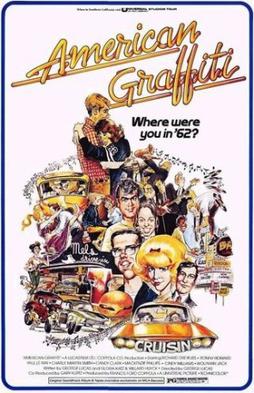
Let's move on to fiction! I am not sure whether we will see any of American Graffiti, but it seems to fit with a number of our stories, so here we are!

The stories that may be on the midterm include the following:
"Coyote and Eagle Visit the Land of the Dead"
"Love in LA"
"The Red Convertible"
"Today's Demon: Magic" (graphic fiction)
"The House on Mango Street"
"Girl"
"Everyday Use"
"Where Are You Going, Where Have You Been?"
"Hills Like White Elephants"
Maus
Persepolis

Main characters, authors' names, settings, and plot points will also be on the exam.  Remember Nancy Armstrong!

Here are some terms for you:
types of stories: literary fiction, genre fiction, folktale, graphic fiction (panel), flash fiction
differences between drama/theater and fiction
again orality
plot: narrative arc (initial incident etc.), false closure, foreshadowing, flashback, exposition, description, dialogue, epiphany
character: flat vs. round, major vs. minor, protagonist, antagonist, anti-hero, showing vs. telling -- ways to develop character
point of view: 1st person (reliable, unreliable, naive), 2nd person, 3rd person (omniscient, objective, center of consciousness, limited omniscience), frame narrative
types of theme: topic vs. thesis statement
graphic fiction:  Ms. Vartanoff covered a LOT, but try to remember different categories like manga and key titles like Maus, Persepolis, A Contract with God, Saints & Boxers, the adaptations of various literary/musical works like Wagner's Ring Cycle, The Tale of Genji, the Odyssey & the Iliad, Girl Stories.  Try to remember key names like Will Eisner, Scott McLeod (theorist/Understanding Comics), Art Spiegelman, Gene Yuen Yang, Lauren Weinstein.  Note that graphic fiction is available in many languages, even simply visual like Blood Song, a novel set in Vietnam.

Study Guide for Midterm EN 190/190HM -- Fall 2013


Below is a modern version of A Doll House:


The following plays will be fair game on the midterm:
A Doll House (mostly DVD)
Trifles
Fences (videos and text)
Crossing the Border
Death of a Salesman (videos only)

For these plays, know the names of main characters (i.e., Nora, Torvald, Troy, Cory, Rose), the playwrights, and major actors (i.e., Claire Bloom, Anthony Hopkins, Denzil Washington, Viola Davis).  Know the plot and setting of plays.  Note that Death of a Salesman is a memory play with flashbacks and no unity of place or time.  Note that Fences is part of Wilson's Century Cycle.

The talk with Christopher Goodrich of Unexpected Stage Company will be on the midterm.

These terms will be fair game:
drama vs. theater (compare with film -- camera angles & composition of shots)
developmental theory (Kohlberg & Gilligan)
act, scene
plot (conflict; the narrative arc-- inciting action, rising action, climax, falling action, resolution/denouement; false closure, flashback, foreshadowing)
character (contrast; impact of action; impact of dialogue; impact of stage directions)
dialogue vs. soliloquoy
exposition
language
family dynamics vs. impact of culture & society & community
community vs. isolation
memory play

orality -- note that Troy is illiterate
theme  -- how did I miss the central idea of a production?!
setting
blocking
stage directions
(more terms from photos)

Consider the developmental theories of Kohlberg and Gilligan:

See below for links to key videos:

Next these are the links to the videos of A Doll House we saw on the first day.

I am trying to find a modern dress version--and here is one!

Here is the infamous Mabou Mines version:  http://www.youtube.com/watch?v=oHn2FxLJOoI

To help with Fences, here are links to Eyes on the Prize, a documentary from the late 1980s.
We watched the video below at the end of class today:

These links are to longer sections:


For more videos of Fences and Death of a Salesman, see the entry below:
http://en202.blogspot.com/2013/09/from-archives-fences-death-of-salesman.html

Here are some scenes from Fences.

Ah, I was able to find James Earl Jones and Courtney B. Vance from 1987!


Here is a juxtaposition of the 1987 and 2010 versions:


Let's look at the Black Theater Ensemble of Virginia's versions of scenes we looked at:


Here Troy explains why he had his affair with Alberta:

South Coast Repertory's scenes are here:

For Death of a Salesman, see these links:

We'll start with the Oberlin production starring Avery Brooks as Willy and Justin Emeka as Biff.

This video sounds much clearer on my new laptop!

Next is the clip of Willy and his sons at the restaurant.  This is the 1980s TV movie with Dustin Hoffman and John Malkovich.


The clip below shows Willy's flashbacks where he sees his sons when they were young.


I do want you to see the end of the play, Willy's funeral:


Questions for 10/3 in EN 190/190HM

Above is a photo of Alabama quilter Mozell Benson.  For more about her and her work, see these links:http://www.arts.state.al.us/actc/1/listserverindividual/20120729mozellbenson.htm

http://arts.gov/honors/heritage/fellows/mozell-benson?id=2001_02&type=bio


 Good afternoon :)

 I wanted to make sure that I sent off the assignment sheet for the next piece of writing, the expanded response fiction, this afternoon.  I know that I haven't started looking over everyone's expanded response to drama, but one has to start somewhere.  Also, I would like to start setting up the study guide for the midterm this afternoon.

For Thursday, please read chapter 7, which is actually about setting and symbol.  We will continue with "Everyday Use" and "Where Are You Going, Where Have You Been," and I may quickly wrap up point of view.

Here are a few quick questions for you.

-- Choosing among the following course themes (family, coming of age, race in America, gender), which readings (stories, graphic fiction, or plays) would you pair?  Why?  

-- What are the advantages and disadvantages to taking a thematic approach to EN 190?  Why?  

-- Choose one of the readings we've had so far.  What appears to be its theme (full sentence)?  why?  How does determining this theme help you understand the reading?

-- Of the stories we've looked at so far, which would be best to perform on stage?  Why?

-- Of the stories we've looked at so far, which would be best to film?  Why?

-- What do you think happens to Connie after the story ends?  Why?

-- Here is a link to the story "Why I Live at the P.O.":  http://art-bin.com/art/or_weltypostoff.html  How does the first-person narration shape this story?  Is she reliable or unreliable?  Why?  Why not?

-- Choose one of the stories we've read.  How does setting (time or place) shape it?  

-- Trace the presence and effects of atmosphere in one of the stories we've read so far.

-- Choose one of the stories we've read.  Pick out a striking image.  Is it a symbol?  Or is it simply what it is?  Why?  Why not?

-- How does reading for symbols make a story more interesting?

-- Discuss the use of third person narration in "Where Are You Going, Where Have You Been?" and "Hills Like White Elephants."

-- Discuss the use of dialogue in "Girl" and "Hills Like White Elephants" as well as "Cigarettes."

I'm looking forward to seeing and hearing what you have to say!

Dr. Szlyk