Thursday, August 28, 2014
Welcome to Fall 2014 and ENGL 190
Watch this space for questions from our class, background readings, and study guides!
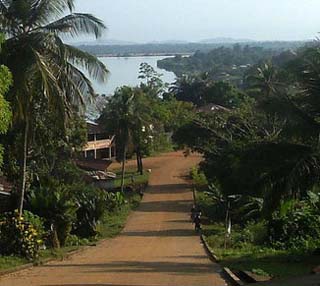
I'm looking forward to meeting you on Sept. 10. The picture above will give you an idea of what will be in store for us this semester.
Dr. Szlyk
Tuesday, May 6, 2014
Questions After Whitman
Yikes! I want to make sure that I send out my questions to you while I'm online this afternoon. Also, if you haven't done so already, be sure to fill out the survey for this class. The link will be gone on Sunday:
https://mc.simplyvoting.com/
Yesterday we finished our readings with Whitman's poetry. I hope that you enjoyed our brief look at his work.
Tomorrow and Friday we will review for Wednesday's exam. Going over your notes, the whiteboard pictures at MyMC, and your journal will help you to review. Our exam will follow the same format as the midterm did.
Here are some questions for you.
-- How did the presentations help you understand American literature a little better?
-- How did Fatu's presentation on Liberian folklore help you understand race relations in the 1800s and/or the Native American folklore?
-- How did Orlando's presentation on American Romanticism help you understand our readings in the second half of class, especially Poe, Hawthorne, Melville, Dickinson, and Whitman?
-- Here are links to some elegies to Lincoln:
These are some lines of John Milton's "Lycidas":
How do they compare to Whitman's "When Lilacs Last..." and perhaps "O Captain! My Captain!"? How are they different? Note that an elegy is often written to honor a dead hero.
-- Prof. Helen Vendler maintains that "When Lilacs Last..." is "not an intimate elegy." What do you think? Here is a link to her argument: http://tannerlectures.utah. edu/_documents/a-to-z/v/ Vendler_01.pdf
Note that she also mentions that Whitman writes from the perspective of others.
-- Sociologist Daniel Levinson and psychologist Erik Erikson have each formulated an interesting theory of human development:
How might these theories apply to Whitman in "Crossing Brooklyn Ferry" and "When Lilacs Last..."? How might they apply to the characters in the stories we've read?
-- How does Whitman write about race? about gender?
-- Here are some links about Whitman and sexual identity: http://www.jstor.org/stable/ 2933958
How might these help you understand his work more?
-- How does Whitman conclude American Literature I?
I'm looking forward to seeing and hearing what you have to say!
Thursday, May 1, 2014
Questions After 4/30 Class
Above is a view of Brooklyn Ferry! We will be listening to Lucille Clifton's performance of this poem in class:
http://www.poets.org/poetsorg/poem/crossing-brooklyn-ferry
Good evening :)
I am pleased to say that I have finally posted the prompts for the final! Please let me know if you need additional information after looking them over.
On Friday Orlando will be presenting on Romantic Literature, a topic we have glanced at this semester. We will begin Walt Whitman, focusing on the poems "Crossing Brooklyn Ferry" and "When Lilacs Last in the Dooryard Bloomed." We will also begin reviewing for the final.
Here are a few questions for your journal:
-- How does Walt Whitman finish up our course?
-- What does he add to American literature? American identity? poetry?
-- What jumps out at you as you read his poetry? Why?
-- How does Whitman capture the experience of being in a city?
-- How does Whitman capture the loss Americans felt after Lincoln's assassination? How does he capture his own emotions?
-- Is Whitman public like a frog? Why? Why not?
-- What does he add to your understanding of gender?
-- Should a writer go out into the world to gather experience? Or should he/she stay home and focus on his/her writing?
-- Discuss the impact of Whitman's line lengths, repetition, and/or free verse.
-- Are you Team Emily? Or Team Walt? Why?
I am looking forward to seeing what you have to say!
Wednesday, April 30, 2014
Final Prompts for EN 211 -- Spring 2014
Below are the prompts for the take home part of the final (50 pts). Choose only one prompt. The essay will be due on Wednesday, May 14. Note that you may choose to write about works that we have not discussed in class.
1. What does the term American literature mean to you? How has this term evolved for you over the semester? How has it evolved in the era that we cover in EN 211? What appears to be the purpose of literature? How does it evolve? Discuss the contributions of four of our readings to your understanding of American literature. Feel free to consider works from different genres as well as those from both Colonial America and the United States of America. Two should be from the first half of the semester; two should be from the second half. How does literature shape American identity? You may also consider works from Canada or Mexico or the Native American peoples. What does each work have in common with the others? How does each work trouble or complicate your understanding of American literature? Note that we have talked about some British authors (John Donne, George Herbert, Samuel Richardson, Katherine Phillips, Jane Austen, Charlotte Temple Smith, etc.) as well. (The British works are above and beyond your four works to discuss.)
2. What role do women play in American literature before 1865? Consider women as characters, audiences, and authors in up to three different works. Which genres or topics do they seem to prefer? How do they view the act of writing as well as its purpose? Recognize that your viewpoint will be grounded in your historical perspective as a 21st century American. Feel free to consider works from different genres as well as those from both Colonial America and the United States of America. Two should be from the first half of the semester; two should be from the second half.
3. Should it matter whether or not a work is popular or even published during its author's life? Why? Why not? Should it matter whether or not a work was popular when it was first published? Why or why not? Refer to up to three of the works that we've read so far this semester. Consider how publication may change a work. Consider the authors' race, class, and gender and these factors' impact on their work and its publication. Note that some of the British authors we've talked about were not published in print (as opposed to manuscript circulation) either. Note that Emily Dickinson chose not to publish her work although many women of her time did. Note that Walt Whitman self-published his work. (The British works are above and beyond your four works to discuss.)
4. What role does race play in American literature before 1865? Consider not only African-American and/or Native American authors and their writing but also African-American and/or Native American characters and audiences as well as European-Americans as a race. Also, consider how race impacts important themes in American literature such as freedom and individualism. Note that Phillis Wheatley is a public poet, perhaps because she must argue for her right to write poetry. Note that readers suspected that Harriet Jacobs' narrative had been written by her editor. Feel free to use 20/20 hindsight, especially about the Civil War. Discuss four works from the semester so far. Two should be from the first half of the semester; two should be from the second half.
5. What role does genre play in American literature before 1865? Consider the genres that you have read in other literature classes (especially at the college & AP level) and those that we are reading this semester. Consider that, in the second half of the class, we have read more traditional literary genres in addition to our life writing and journalism. Discuss the impact of gender, class, race, and historical period. Note that we have talked about some British authors (John Donne, George Herbert, Jane Austen, etc.) as well and that we have read both canonical and non-canonical writers. Refer to up to four works. (The British works are above and beyond your four works to discuss.)
6. What role do landscape and geography play in American literature before 1865? Consider differences in genre, historical period, gender, race, and class among authors and their works. If you have studied later American literature and/or read the work of nature writers such as Terry Tempest Williams, Barry Lopez, or Henry David Thoreau, feel free to bring their insights into your discussion. You may also bring in insights from your reading of British writers, especially the Romantics. Refer to four works. Two of these should be from the first half of the semester; the other two should be from the second half.
Good luck! Feel free to check in with me if you have questions.
Monday, April 28, 2014
Questions After 4/28 in EN 211
Good evening :)
It's hard to believe, but we are beginning our next to last week of class. Emily Dickinson is our next to last author. Walt Whitman will be the last.
At the beginning of Wednesday's class, I'll take some time to go over the readings we will cover for the final. The final will also include the presentations by Miriam, Sabina, and Fatu. Will we have others in class?
See the links below for the sonnets by Higginson, Dickinson's friend and "mentor":
It's interesting that none of the poets we've covered so far in EN 211 wrote sonnets. Of course, from John Milton in the late 1600s to William Wordsworth in the 1790s, sonnets were out of style.
In addition, here is some information about Dickinson's drafts:
What does this information tell you about her poetry? or poetry in general?
Discuss the style of Dickinson's poetry.
How does she express passion?
How does she describe nature?
Here is a class website on Romantic Writers and Natural History, ironically from Dickinson College: http://blogs.dickinson.edu/ romnat/2011/06/07/charlotte- smith/
What does this information tell you about how writers in the 1800s thought about nature? how Dickinson and/or Higginson thought about nature?
By the way, here are some poems by Charlotte Turner Smith (1749-1806) who encouraged young women to study nature:
Compare these sonnets to Higginson's or to Dickinson's poems.
And we have not discussed Dickinson's poems about social isolation and death.
How does Dickinson's poetry evolve over time? What remains the same?
What does Dickinson tell us about the American landscape?
What is most American about Dickinson's poems? Why?
Am looking forward to hearing more of what you have to say about Dickinson's poems!
Have you submitted your evaluation yet?
Friday, April 25, 2014
Questions After 4/25 in EN 211
Above and below are some pictures of Liberia.
Good evening :)
I hope that you enjoyed Fatu's energetic and entertaining presentation on Liberian folktales. It reminded us of the folktales we read at the beginning of the semester, but it also provided another perspective on one supposed solution to the problems of slavery. I am looking for a video that a student showed in EN 202 one summer to provide background on modern Liberia. In the meantime, here is an interesting documentary about American Marylanders' trip to Maryland in Liberia.
Here is Frederick Douglass' editorial on emigration to Liberia:
Harriet Jacobs' complete narrative is here:
After seven years, she ended up, with the help of Peter, a friend of the family, escaping on a ship.
On Monday, we will move on to the poetry of Emily Dickinson. Please read up to p. 1488. We will not discuss all of the poems.
Here are some links to my reviews of books on ED:
I'll conclude with a few questions for your journals.
-- What jumps out at you as you read Emily Dickinson's poems? How are her poems like today's poems? How are they different?
-- What does ED add to American literature? American identity? How does she complicate it?
-- How does she finish up our course?
-- What does she add to your understanding of women's writing?
-- What does she add to your understanding of gender roles in the past? How does she complicate them?
Here is a link to The Belle of Amherst, a play depicting ED as a middle-aged woman:
How does this play help you understand her poems? How is it irrelevant to your understanding of her poems?
Note that one of the only known photographs of ED is one of her as a teenager, long before she wrote her poems.
How does this affect your response to her poetry?
Which themes are prevalent in ED's poetry so far?
Which poetic devices are prevalent?
What do you learn about the poet and her world from reading these poems? Why?
Compare ED's poems to others that you have read in this class and elsewhere.
By the way, here is a link to sonnets by T.W. Higginson, who would later edit her work:
What does it seem to mean to be "Team Emily"?
I am looking forward to seeing and hearing what you have to say!
Thursday, April 24, 2014
Questions After 4/23 in EN 211
The picture of Ms. Jacobs above is from 1894. Below is a drawing of her hiding place in her grandmother's attic.
Good afternoon :)
Tomorrow we will continue to discuss Incidents in the Life of a Slave Girl and (I hope) watch Fatu's presentation. I also hope to be commenting on your papers soon!
Next week we will start reviewing for the final and finishing up with Whitman and Dickinson.
Here are the links to the videos we watched in class yesterday:
I hope to read Dr. Fagan Yellin's biography of Harriet Jacobs at some point as she has done so much to recover Jacobs' life and work.
Here are a few more questions:
-- What does Jacobs' narrative add to your understanding of slavery?
-- How does she depict her family? her community? her owners?
-- Discuss Jacobs' response to Mrs. Bruce's decision to buy her freedom. Do you feel that Mrs. Bruce did the right thing? Or not? Why?
-- Discuss Jacobs' decision to hide in plain sight rather than to escape up North.
-- Compare and contrast the actual runaway notice for Harriet Jacobs http://www.pbs.org/ wgbh/aia/part4/4h1541t.html with the version included in Incidents. What does this tell you about Jacobs' presentation of herself to her audience? What does this tell you about Dr. Norcom's perception of Jacobs?
-- How does Jacobs use literary devices in her narrative? How does she use elements of literature?
-- How does Dr. Fagan Yellin's referring to Jacobs as a "teenager" affect your understanding of her narrative?
-- Compare Jacobs' childhood to Douglass' and Equiano's.
-- Compare Jacobs' youth to Douglass' and Equiano's.
-- Which would be a better way to group authors--by their date of birth or their date of death? Why? (In a review of a book by Prof. Devoney Looser, I noted that " Looser playfully argues for classifying authors by the dates of their death, rather than their birthdates. She observes that 'Jane Austen (1775-1817) and Sir Walter Scott (1771-1832) would come before Maria Edgeworth (1768-1849) and Frances Burney (1752-1840)' (169)." ) As Harriet Jacobs died in 1897, we would be ending with her although Harriet Beecher Stowe would be very close to the end since she died in 1896. We would also be reading Melville alongside Whitman as their dates of death are very close (1891 vs. 1892). Imagine if I were better at following chronology!
Feel free to come up with some of your own questions based on your interests and our class discussion.
Subscribe to:
Posts (Atom)


.png)